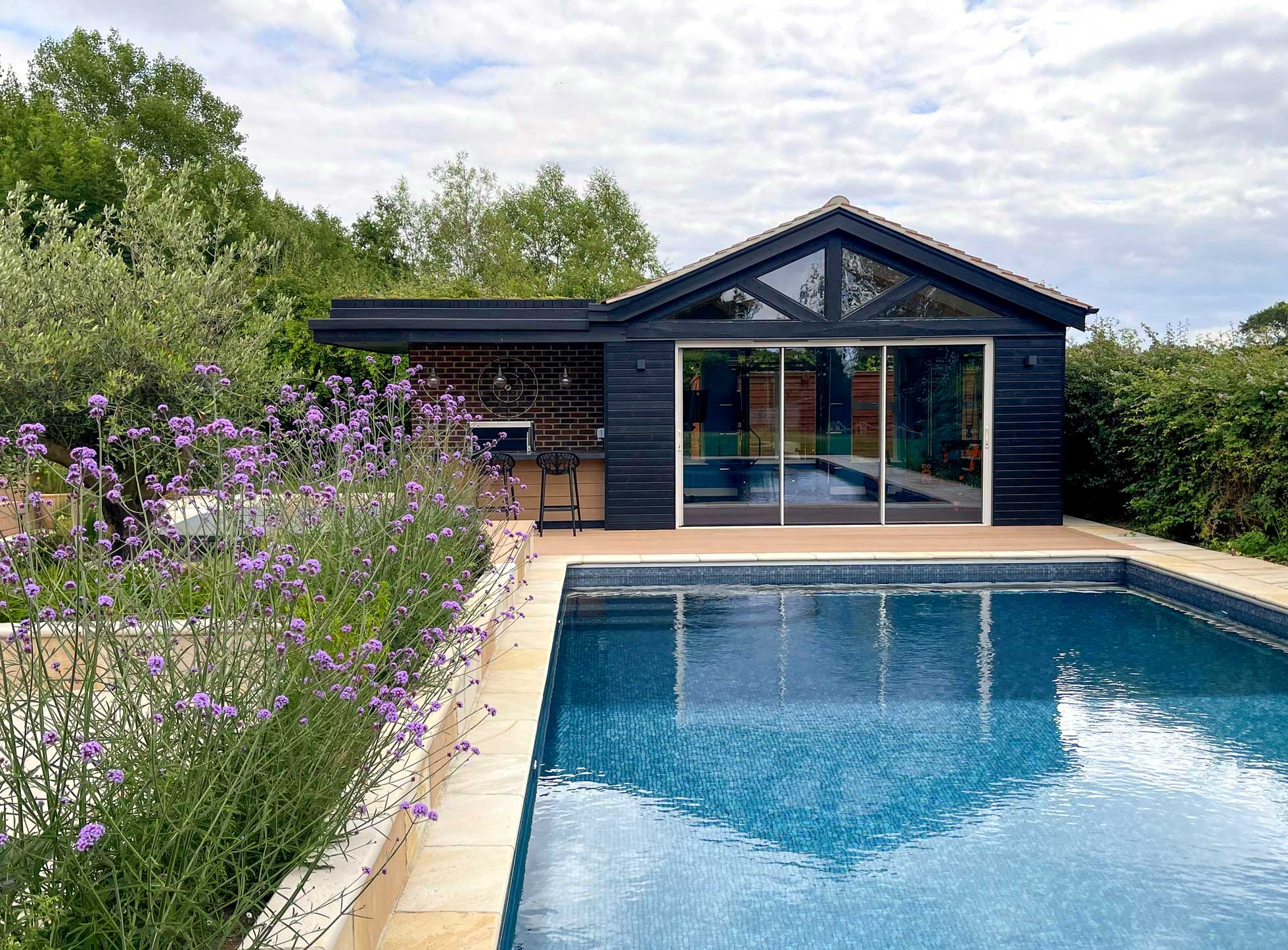
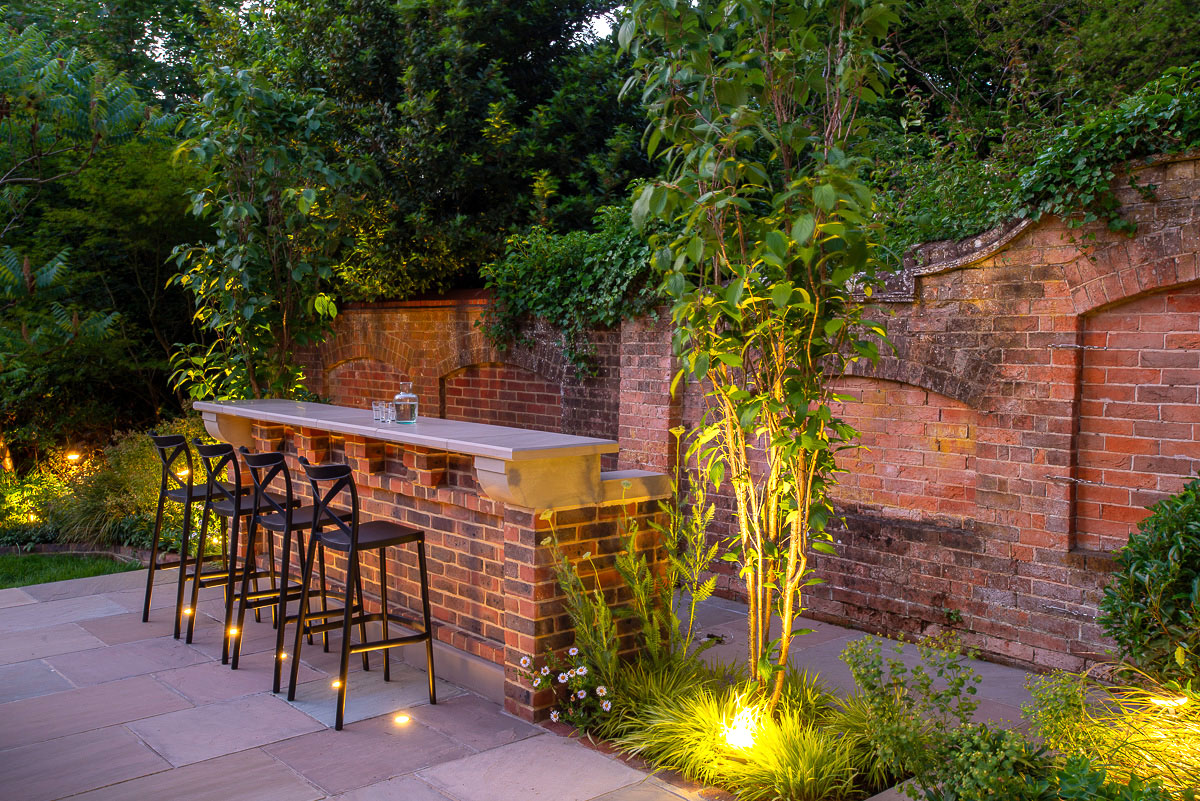
Throughout Tunbridge Wells, gardens are often characterised by steep gradients, mature trees, sandstone outcrops and woodland boundaries. These features can create technical challenges for garden design, but they also provide many of the qualities that make the area's landscape so distinctive.
The local sandstone geology is particularly characteristic of Tunbridge Wells and frequently reveals itself in changes of level, retaining walls, exposed rock formations and natural terraces. Rather than treating these as obstacles, thoughtful design can use them to create structure, drama and a stronger connection between the garden and its setting.


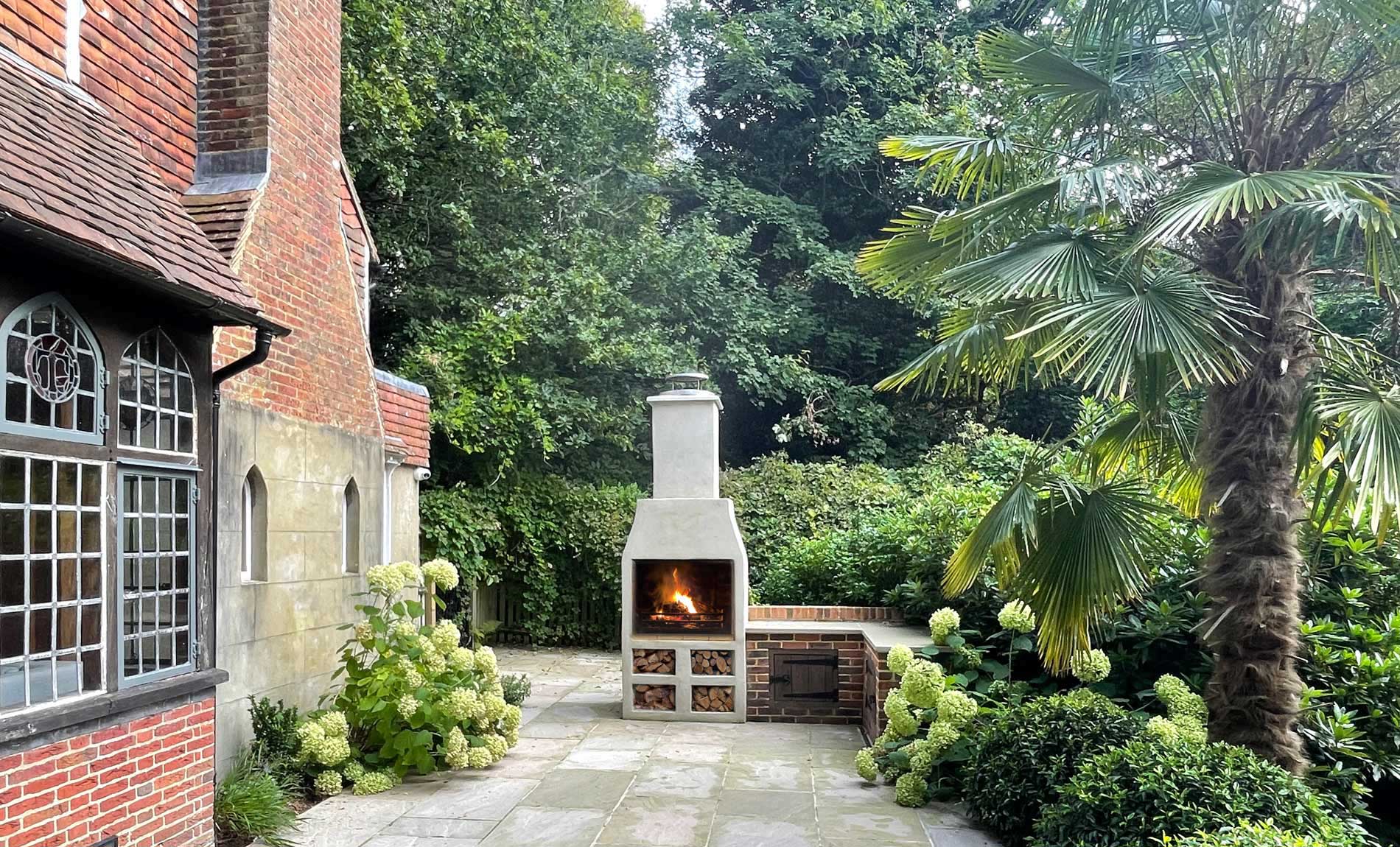
Experience of working within these constraints is essential. Whether designing around mature root systems, managing complex levels or creating sensitive interventions within historic settings, the aim is always to achieve a garden that feels both natural and enduring.
Architecturally, the properties of Tunbridge Wells, Hungershall Park, Nevill Park, Camden Park and Calverley Park offer an unusually rich mix of building styles. The grand Victorian villas and elegant houses associated with Decimus Burton's original vision sit alongside traditional farmhouses, converted agricultural buildings and contemporary new-build homes with lots of glass. Each setting brings its own opportunities and constraints, requiring a different design response. All benefit from a creative vision that feels connected to the wider landscape and appropriate to the character of the property.
Our clients often ask...
Yes. Many properties in Tunbridge Wells have historic or architectural significance, from Victorian and Edwardian houses to Regency properties. We regularly work with period homes, renovations and restorations, and understand the importance of creating landscapes that respect architectural heritage while supporting modern living.
Absolutely. The varied topography of Tunbridge Wells means many gardens involve significant changes in level. Careful consideration of drainage, retaining structures, circulation and views allows challenging sites to become some of the most rewarding landscapes.
Yes we do. Many projects involve Conservation Area restrictions, Tree Preservation Orders or other sensitive planning considerations such as 'Dark Sky' designation, and Ecology and Biodiversity Policies. These factors are taken into account from the outset to ensure the design is both beautiful and practical for our clients, and approved and supported by those concerned with preserving the character of Tunbridge Wells and its local and wider environment.
Yes it can. We specialise in integrating swimming pools and other wellness facilities – pool houses, gyms, saunas, plunge pools – into a cohesive wider garden design, including steep sites. In fact, with the right approach, sloping sites offer great opportunities for creative solutions. The aim is always to ensure that these elements feel part of the overall garden experience rather than awkward additions.
Yes. Our projects include gardens for contemporary architect-designed new-builds, conversions and extensions. Every design is developed in response to the architecture, the landscape and the lifestyle of the client.
The earlier the better to fully benefit from our knowledge and experience – in fact before or at least at the same time as engaging an architect or planning consultant, certainly before making any kind of alteration. We work with all the area's Architects so, whether you are planning a garden for a new build, a renovation or restoration, a rebuild or extension, involving us from the outset not only helps ensure the house and garden are considered together but can also avoid costly consequences and compromises in the project journey.
Or visit specific Tunbridge Wells gardens: